Research & trading platform
Bringing a classic but outdated option chain experience into the 21st century
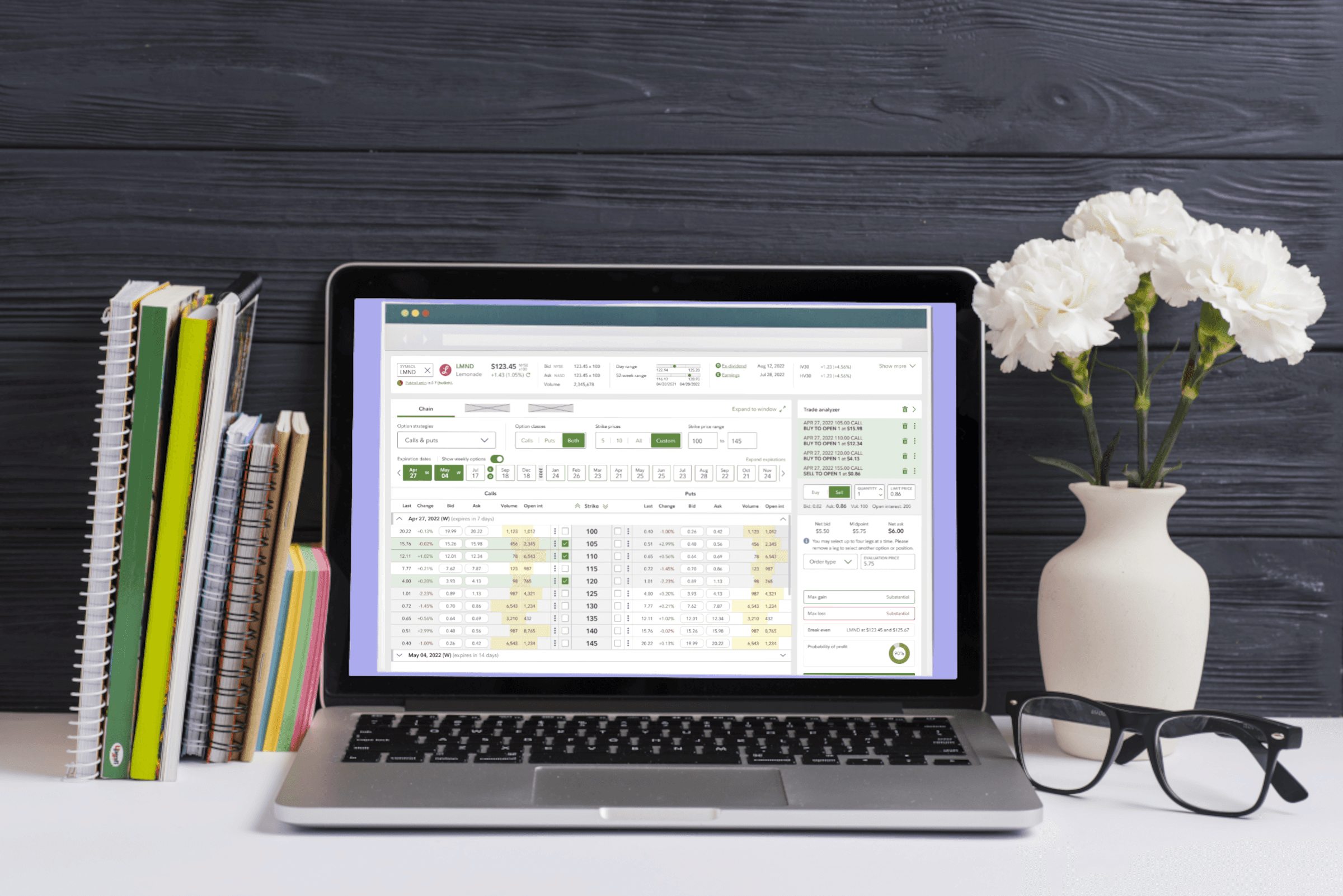
Title
Industry
Date
Team size
Role
Skills
Tools
% ▲
Revenue
increase for the firm
% ▲
Net asset flow
increase for the firm
% ▲
Daily average trades
year-over-year
Results
Fidelity simplified the options trading experience by launching new web and mobile onboarding, research, and trading features, including contextual education and streamlined experiences within the options trading flow.
– Fidelity Investments 2024 Annual Report
Situation
Fidelity’s aging trading platform is lagging behind the trend of younger and novice investors seeking intuitive, accessible options trading offerings provided by competitors.
► How do we lower the barrier of entry for new traders without alienating veteran traders?
► How do we leverage modern technologies and design trends while avoiding the disruption of industry standards and existing mental models?
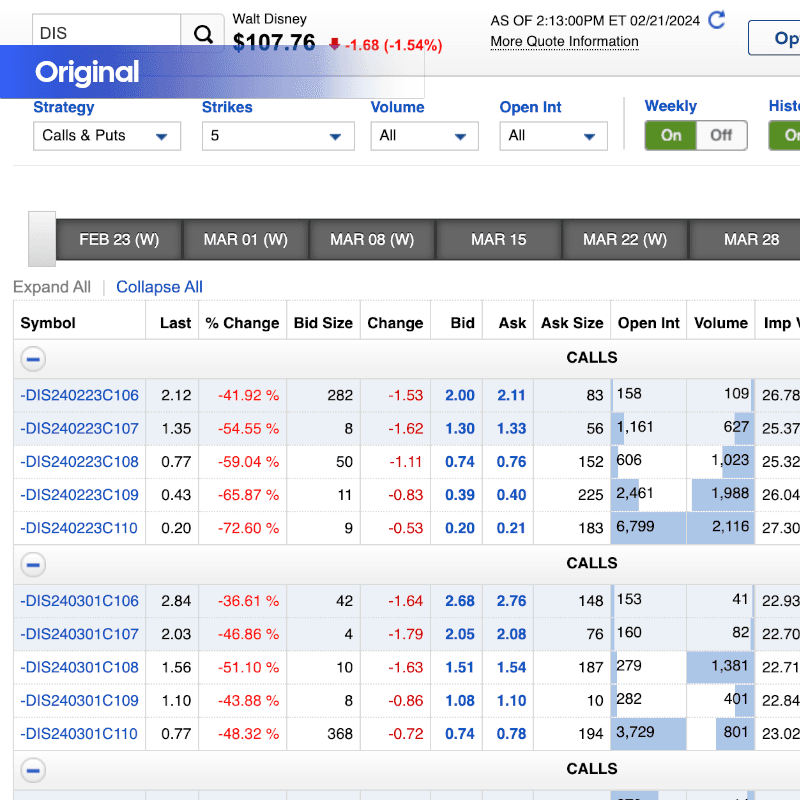
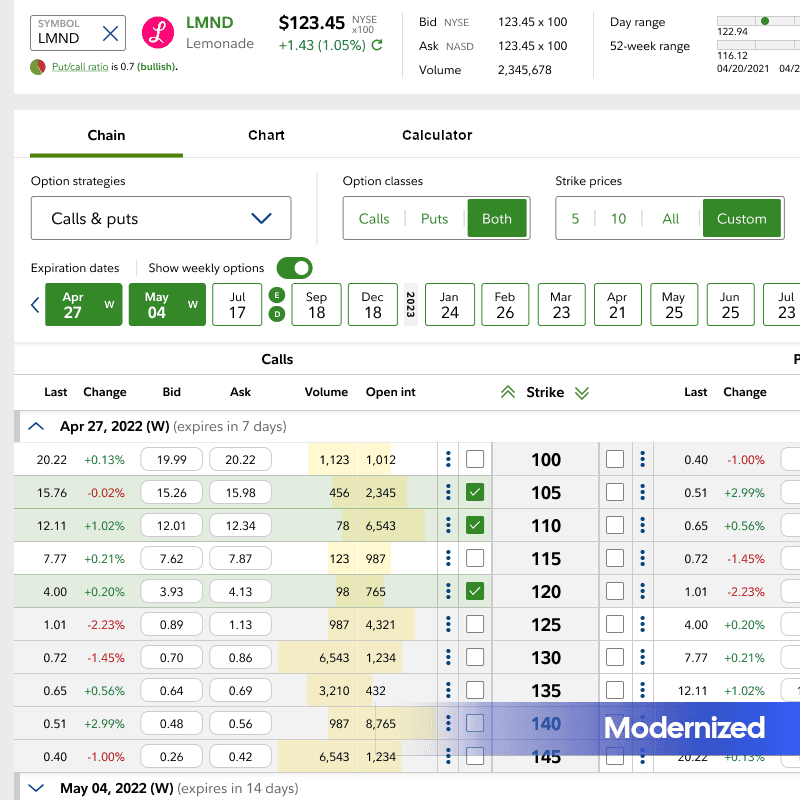
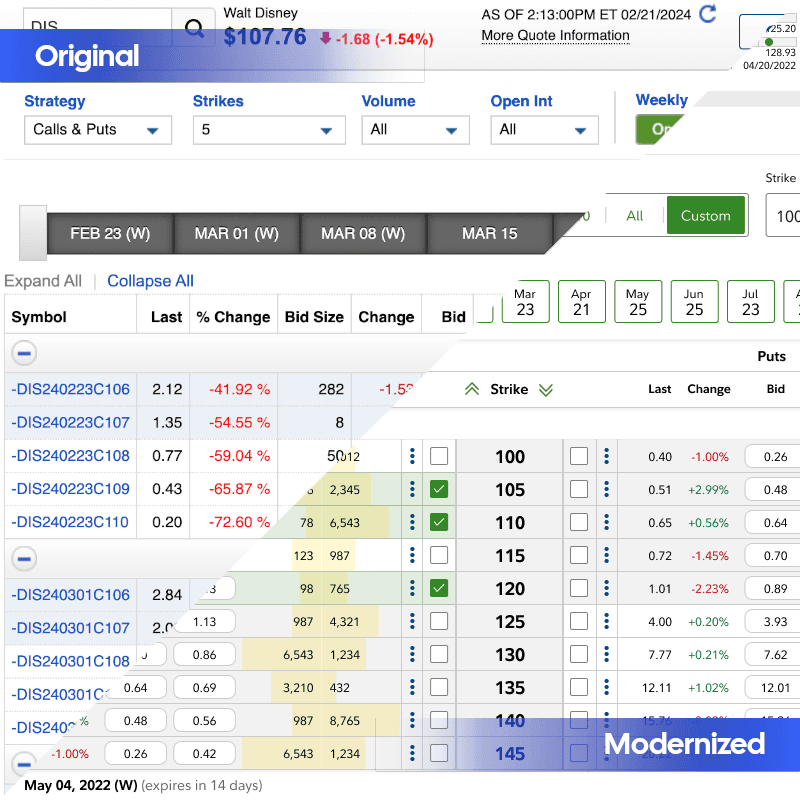
Design: Option Chain
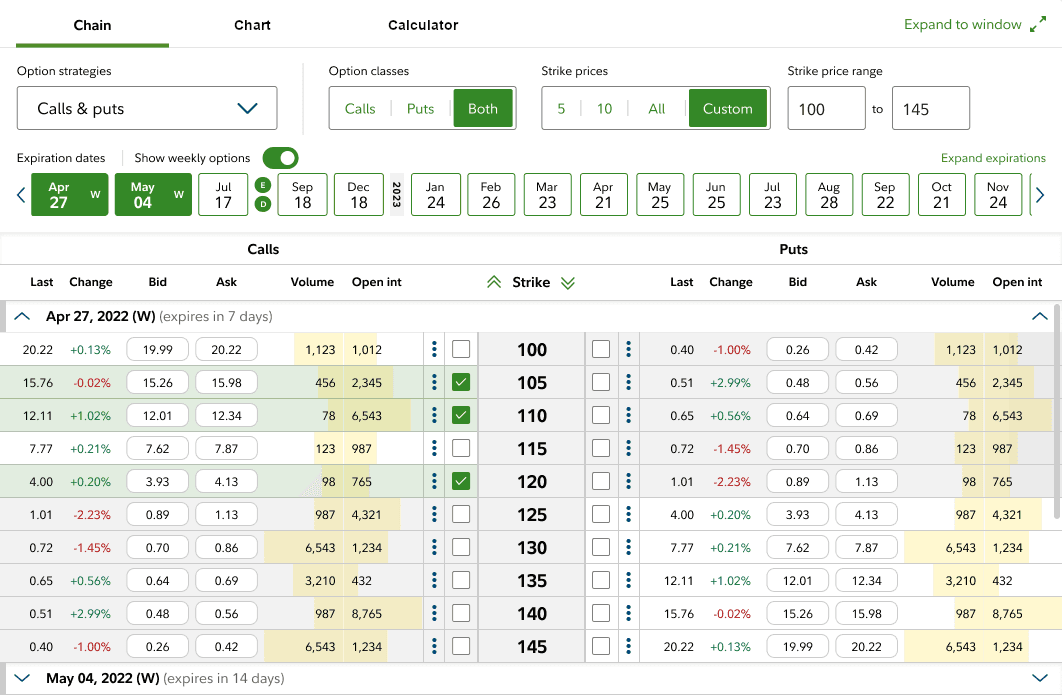
The option chain is the cornerstone of the option trader’s experience. Research indicates that Fidelity’s classic option chain has become slow, is difficult to use, and looks archaic when compared to more modern web-based UX (especially for responsive tables and grids).
I worked closely with our analysts to design a modernized option chain with enhanced functionality that allows users to improve their workflows, including better integration with other trading and research tools and an improved layout that allows for better interaction on devices with smaller form factors.
Interaction in motion: calendar spread
I designed this user interaction for creating a calendar spread, a unique option strategy requiring selection of two expiration dates.
Interaction design document: calendar spread
This is the latest implementation of a user interaction I designed for creating a calendar spread, a unique option strategy requiring selection of two expiration dates.
Design: Trade Analyzer
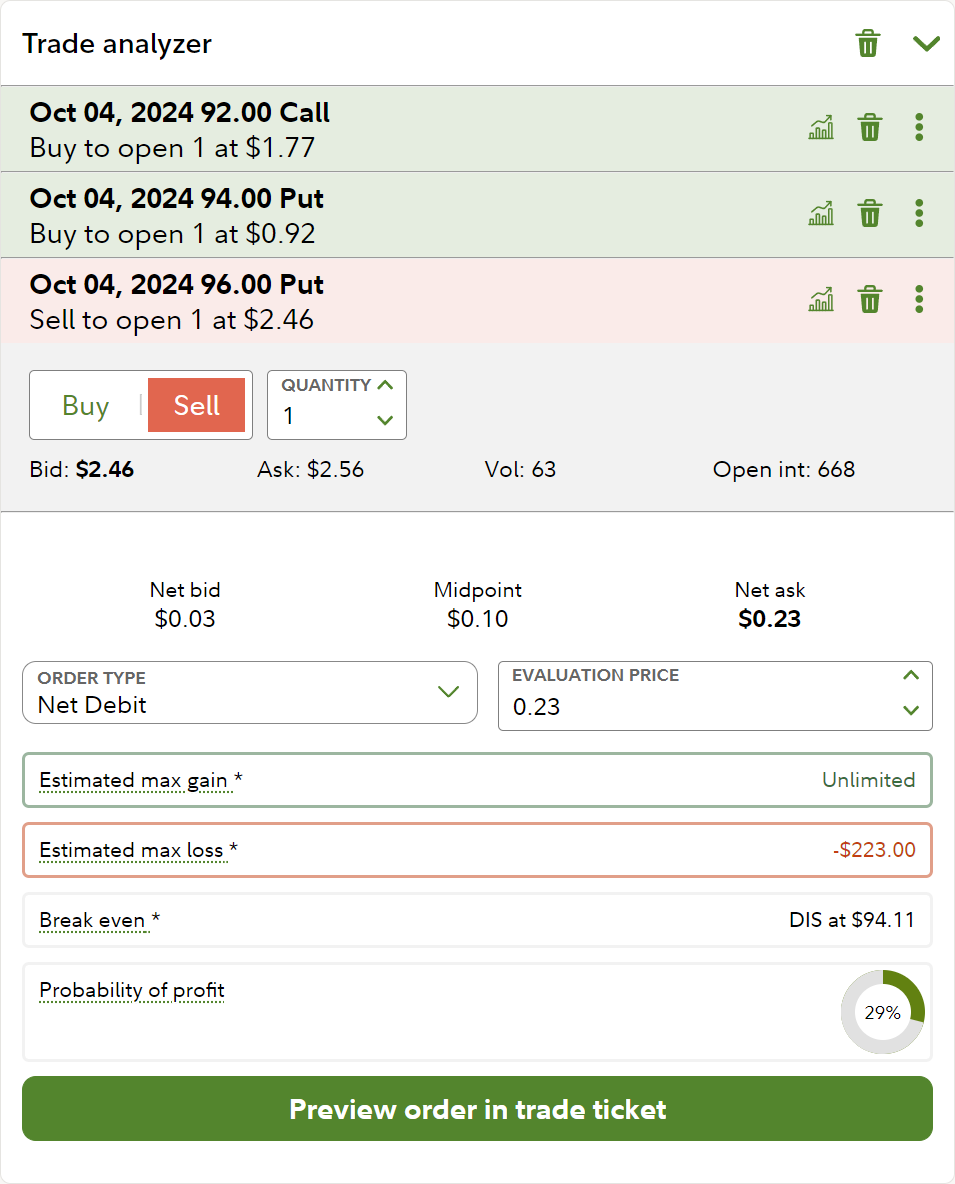
I envisioned the trade analyzer as a complementary feature to the option chain. By selecting multiple options from the chain, users can build their own custom multi-leg option strategies and perform on-the-spot analysis before placing trades.
The trade analyzer behaves responsively to ensure that the chain remains highly usable, and it can be expanded or collapsed to further aid the chain’s usability.
The trade analyzer has been well-received by users and acts a bridge that spans the gap between the option chain and the option trade ticket by allowing users to analyze desired trades quickly and effectively.
Furthermore, it synchronizes with the platform’s charting capabilities and allows users to track their selected option and stock prices in real time.
Test & Learn
By way of Qualtrix surveys, we monitor user feedback on a regular and frequent basis to test each incremental release and determine how well we have responded to our users’ needs and pain points. Analyzing this feedback in the Agile framework allows me to introduce UX improvements on a consistent basis and better enables me to perform creative quality assurance on our latest implementations.


Selected projects that reflect my approach to design, teamwork, and product development.